
Running your own business can provide financial flexibility, but showing a lender how much income…
Conventional Loans: What Move-Up Buyers Need to Know About Flexible Mortgage Options
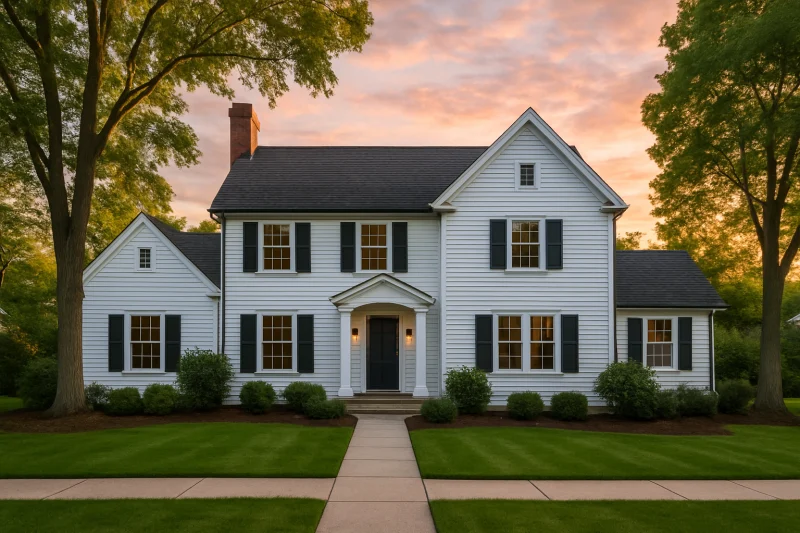
Stepping up to your next home is an exciting milestone, but it also comes with important decisions, especially when it comes to finding the right mortgage fit for your changing needs. Conventional loans are mortgages that are not insured or guaranteed by a government agency, and they offer a wide range of options ideal for move-up buyers seeking competitive rates and customizable terms. In this article, we’ll break down what conventional mortgage products can offer, cover the key qualifications you’ll want to know, and help you understand how to navigate your next move with confidence in Massachusetts and the Greater Boston area.
Key Takeaways
- Purpose: Move-up buyers often use conventional loans to finance their next primary residence with maximum flexibility and straightforward qualification.
- Requirements: These loans typically require stable income, a qualifying credit score, and a down payment (as low as 3% for some buyers).
- Features: Conventional loans come in fixed and adjustable-rate options, conforming and jumbo sizes, and allow property types ranging from single-family to multi-unit homes.
- Best For: Homeowners who have outgrown their current space, want to leverage built-up equity, or need straightforward approval for a primary or secondary home.
Quick Answers: Conventional Loans for Move-Up Buyers
- Can I get a conventional loan before selling my current home?
Yes, it’s possible using a bridge loan or by qualifying with both mortgage payments; requirements vary by lender. - Is mortgage insurance required?
Generally, if your down payment is less than 20%, private mortgage insurance (PMI) is required, but it can often be removed once you build sufficient equity. - What’s the difference between conforming and jumbo conventional loans?
Conforming loans are within federal loan limits set for each county; jumbo loans exceed those limits and have slightly different qualification standards. - Can I use my equity from my current home as the down payment?
Absolutely, many move-up buyers use proceeds from their sale toward the down payment on their new purchase.
What Is a Conventional Mortgage?
A conventional loan is a home mortgage that isn’t insured by the federal government and is offered through private lenders. These loans can be conforming (falling within local loan limits and meeting the guidelines set by Fannie Mae or Freddie Mac) or jumbo (where the amount exceeds conforming loan limits). At Blue Door Mortgage (NMLS# 2218), we work with both and help you identify which option suits your move-up scenario best.
Unlike FHA, VA, or USDA loans, conventional loans have broadly flexible guidelines and are a staple for buyers with established homeownership history, including those upgrading to a new property.
Why Move-Up Buyers Choose Conventional Loans
If you’re selling a current home and aiming to purchase another, conventional loans often provide the greatest range of choices:
- Flexible down payment options (as low as 3% for some buyers, though more is common for move-up scenarios)
- Ability to finance single-family homes, townhouses, condos, or multi-unit properties
- Wide selection of fixed- and adjustable-rate terms
- Faster processing times and fewer property restrictions compared to many government-backed loans
Move-up buyers often have equity to work with from their existing home, making conventional loans particularly attractive due to potentially lower PMI requirements and more straightforward underwriting on higher loan amounts.
Key Qualification Guidelines
While requirements can vary with lender and property type, here are the core conventional loan standards move-up buyers should keep in mind:
- Income verification: Lenders typically look for stable employment and income history. Self-employed individuals may need to provide additional documentation; see our Bank Statement Program for flexible options if your income varies.
- Credit criteria: Conventional loans generally require a higher credit score than some government programs, but guidelines range and exceptions are possible.
- Down payment: Minimums start as low as 3% (for qualified buyers) but move-up buyers often put down more—especially when proceeds from a sale are being used.
- Debt-to-income ratio: Lenders calculate this based on your gross monthly income versus your debts, including current and future potential mortgage payments.
- Appraisal: The property must appraise for at least the loan amount and meet certain condition standards.
Guidelines change often, so let our experienced team walk you through exactly what’s needed for your specific scenario in Newton, Boston, Brookline, and nearby areas.
Using Home Equity and Bridge Loans
A common question for move-up buyers is how to handle the timing between selling and buying. You have a few common options:
- Sell first, then buy: Many owners choose to sell their current home, use the equity as a down payment, and close on their next property.
- Buy before selling: Bridge loans can give you access to funds tied up in your current property, so you don’t have to coordinate both closings. Learn more on our Bridge Home Loan page.
- Home equity line of credit (HELOC): Some borrowers tap their home’s equity with a HELOC prior to sale, using the proceeds for the new purchase. See our HELOC Home Loan page for additional details.
If you’re weighing the logistics of your move, we’re here to provide straight answers and help determine the best approach for your timeline and finances.
Loan Size: Conforming vs. Jumbo Conventional
Conventional loans come in two major size categories:
- Conforming loans: These adhere to loan limits set for your county. They typically have the widest eligibility and most competitive rates.
- Jumbo loans: These are for higher-priced properties where the loan amount exceeds local conforming limits. Jumbo loans have more stringent guidelines, larger down payment requirements, and may require extra reserves but can open doors for buyers in higher-priced markets like Wellesley or Brookline. Visit our Jumbo Home Loan page for more details.
Fixed-Rate vs. Adjustable-Rate
Conventional mortgages are available in both fixed-rate and adjustable-rate options. A Fixed Rate Mortgage features predictable payments for the life of the loan, while adjustable-rate options can start with a lower rate that may adjust after a set period. Your best choice depends on how long you plan to stay in the home and your comfort with future payment changes—our team can help compare what fits your plans best.
Documentation and Preparation Tips
For a smooth move-up purchase, start gathering the following:
- Recent pay stubs and W-2s (or tax returns if self-employed)
- Bank statements showing proof of down payment and reserves
- Documentation of any assets or proceeds from your home sale
- Current mortgage statements if you’re retaining your property or have a bridge/HELOC
Planning ahead and working with a team that combines professionalism and personal attention makes for a much less stressful experience. We’ve helped thousands of homeowners and families through the process—let’s make your next step a successful one.
Navigating Local Nuances
Every market is a little different. In the Greater Boston area (including Newton, Brookline, and Wellesley), competitive home prices can mean greater reliance on jumbo loan guidelines and quick decision-making. Our local expertise helps ensure you’re positioned to act confidently in fast-moving markets and receive pre-approval that stands out to sellers.
Getting Pre-Approved for Your Next Home
Pre-approval is always a good idea—especially for move-up buyers juggling two homes or a complex transaction. It helps you:
- Understand your budget before shopping
- Demonstrate credibility to sellers
- Move quickly when you find the right home
- Simplify paperwork and reduce surprises at closing
Ready to compare options? Contact us anytime to review your scenario, walk through your property goals, and discuss pre-approval planning tailored for your Massachusetts move-up journey.
Frequently Asked Questions
How long does it take to close a conventional loan for a move-up purchase?
Most conventional loans can be closed within 3-6 weeks, depending on how quickly you can provide documentation, the complexity of your transaction, and appraisal timing. Delays may occur if you’re coordinating the sale of another property, so planning ahead is key.
Are there specific restrictions on using gift funds for a down payment?
Yes, conventional loans allow gift funds from eligible donors, but gifts must be properly documented and can’t come from anyone with a financial interest in the transaction (such as the seller or real estate agent). Lenders will provide specific requirements.
Can I keep my current home and still qualify to buy a new one with a conventional loan?
It’s possible to retain your existing property and buy another, but you will need to show you can comfortably cover both mortgage payments, property taxes, and insurance. Rental income from your existing property may be considered, but documentation rules apply.
What property types are eligible for conventional move-up mortgages?
Conventional loans can finance a wide range of properties, including single-family homes, condos, planned-unit developments, and certain multi-unit residences. Guidelines for minimum down payments and occupancy requirements can differ based on property type.
Do I need to re-qualify if my purchase takes longer than expected?
Yes, if your purchase timeline extends past your original pre-approval expiration (commonly 60–90 days), you will likely need to update financial documentation and verify employment again before closing. Staying in touch with your loan officer helps avoid surprises.
This is educational and not financial advice. Loan programs and guidelines can change. Talk with a licensed mortgage professional about your specific scenario.

About the Author
Jonathan White
President at Blue Door Mortgage · NMLS #3443
I am the President and one of the producing Mortgage Brokers for Blue Door Mortgage located in Brookline, Massachusetts. With over 29 years in the Mortgage Brokerage business, I have helped thousands of homeowners and generations of their families with the purchasing and refinancing of their properties.
Specializes in: Conventional, FHA, Jumbo
Licensed in: FL, MA, NH, RI
Related Posts


