Many Veterans exploring home financing are faced with the question of whether a fixed or…
Mortgage Options for Veterans: VA, FHA, and Conventional Loans Explained

Buying a home as a veteran opens doors to special opportunities, but sorting through your mortgage options can take some real navigating. Veterans may qualify for several types of home loans, including VA, FHA, and Conventional mortgages, each with its own unique benefits and eligibility requirements. In this article, we’ll break down these loan programs, highlight key features, and help you compare which mortgage solution may fit your needs best as you plan for a home in Massachusetts or beyond.
Key Takeaways
- Purpose: VA, FHA, and Conventional loans are all options for veterans looking to buy, refinance, or renovate a home.
- Eligibility: VA loans require active-duty or veteran status, FHA loans have flexible credit requirements, and Conventional loans generally require higher credit scores and down payments.
- Down Payment: VA loans often require no down payment; FHA loans may need as little as 3.5% down; Conventional loans typically start at 3% for eligible buyers.
- Best For: Veterans, first-time buyers, move-up buyers, and self-employed borrowers exploring affordable home financing options.
Quick Answers: Mortgage Options for Veterans
- Can veterans qualify for more than one loan type? Yes, most veterans have access to VA, FHA, and Conventional loan programs if they meet basic requirements.
- Is a VA loan always the best choice for a veteran? Not always—while VA loans offer unique benefits, FHA and Conventional mortgages may be more suitable in some situations.
- Are down payment requirements different for each loan? Yes—VA loans often require no down payment, while FHA and Conventional loans usually require a minimum down payment.
- Do VA loans have mortgage insurance? VA loans do not require monthly mortgage insurance, but do include a one-time funding fee.
Understanding VA Loans: Benefits and Basics
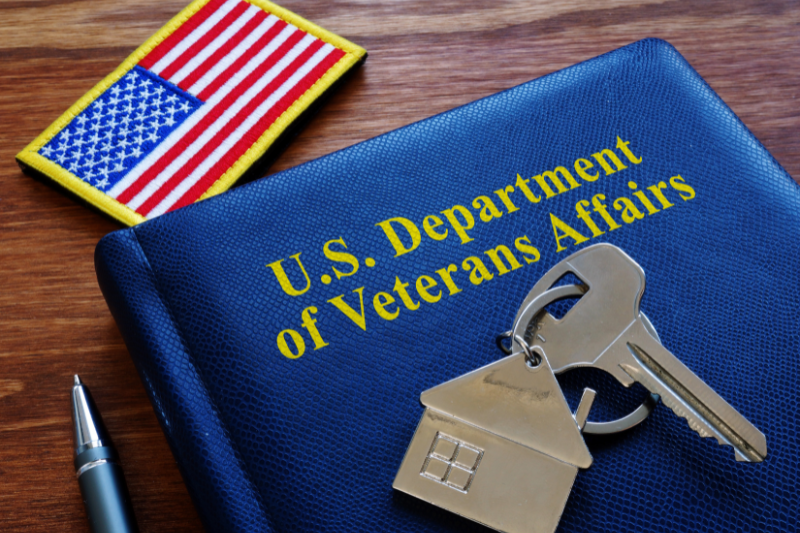
The VA home loan program has helped generations of veterans and service members become homeowners—whether buying, refinancing, or improving a home. A VA loan is a mortgage backed by the U.S. Department of Veterans Affairs, allowing eligible borrowers to finance a primary residence with little or no down payment and no monthly mortgage insurance.
The team at Blue Door Mortgage (NMLS# 2218) specializes in guiding veterans through the VA loan process, bringing professionalism to every step. Here’s a look at what sets VA loans apart:
- No required down payment for most borrowers, subject to property value and entitlement.
- No monthly private mortgage insurance (PMI), which lowers your ongoing costs compared to many loan types.
- Competitive interest rates relative to market conditions.
- Flexible credit standards, designed with the needs of veterans in mind.
- One-time funding fee (may be financed), which supports the program—there are certain fee exemptions for eligible borrowers.
Eligibility for a VA loan generally requires a Certificate of Eligibility, sufficient service history, and property plans for a primary residence. Guidelines can vary, so it’s best to review your situation with a knowledgeable lender.
Who Benefits Most from VA Loans?
VA loans are often an excellent fit for:
- First-time buyers who want to limit out-of-pocket expenses
- Move-up buyers using their VA entitlement for the next home purchase
- Veterans and eligible service members with moderate credit
- Self-employed borrowers looking for flexibility in qualifying for a home loan
FHA Loans for Veterans: A Flexible Alternative
Sometimes, a VA loan isn’t the right fit for a specific home, loan amount, or personal situation. FHA loans are government-insured mortgages with flexible credit guidelines and low minimum down payments, open to all qualifying borrowers—including veterans.
Key features of FHA loans include:
- Low minimum down payment: Often as little as 3.5% for credit-qualified buyers.
- Flexible credit guidelines: May be more forgiving of past credit challenges than many Conventional loans.
- Monthly mortgage insurance (MIP): Required on all FHA loans, regardless of down payment size or credit score.
- Maximum loan limits: These loans are subject to local maximums; check the current guidelines for your area.
Why a veteran might choose an FHA loan:
- If using their VA entitlement isn’t possible or preferred
- When flexible credit requirements are more suitable (e.g., recent credit history issues)
- If purchasing a property that doesn’t meet VA standards
Conventional Loans: A Mainstream Option for Veterans
Veterans are often eligible for regular Conventional mortgages, which may appeal in certain scenarios. A Conventional loan is a home loan not backed by a government agency, usually meeting standards set by Fannie Mae or Freddie Mac. These loans can be used for a wide variety of property types and loan sizes, from starter homes to jumbo properties.
Key points about Conventional loans to keep in mind:
- Down payments: As low as 3% for eligible borrowers, but larger down payments may improve your rate and terms.
- PMI: Private mortgage insurance is required with a down payment under 20%; this can be cancelled when equity grows to a certain level over time.
- Usually stronger credit required: Conventional guidelines may require higher credit scores and verifiable income.
- Variety of term options and loan structures: Fixed-rate or adjustable-rate, as well as Home Equity Lines of Credit (HELOCs) and renovation loans.
Veterans may find that a Conventional loan is a strong choice when:
- Purchasing a high-value home (sometimes exceeding VA/FHA limits)
- Looking for flexible property options, including second homes and investment properties
- Enjoying the ability to eliminate PMI with a 20% down payment
Comparing VA, FHA, and Conventional Loans
Choosing between these loan types is about matching your financial profile and homeownership goals. Here’s a quick side-by-side comparison:
| Feature | VA Loan | FHA Loan | Conventional Loan |
|---|---|---|---|
| Backing/Insurance | VA (government) | FHA (government) | Not government-backed |
| Common Down Payment | 0% (often) | 3.5% (minimum) | 3% (minimum) to 20% |
| Mortgage Insurance | None monthly; funding fee applies | Monthly MIP required | PMI if < 20% down; can be cancelled |
| Typical Credit Guidelines | Flexible, allows fair credit | Flexible, may allow recent credit events | Higher credit standards |
| Who Qualifies | Eligible veterans/service members | Most credit/income qualified borrowers | Credit/income qualified borrowers |
Choosing the Right Mortgage for Your Needs
With all these choices, it’s important to match the loan program to your financial profile, property goals, and long-term plans. Some veterans prefer the low-cost entry of a VA loan; others may appreciate the flexibility of FHA, or the options that come with a Conventional loan. A mortgage professional can offer straight answers about eligibility, document requirements, and guidelines as they apply to Massachusetts and the surrounding states we serve.
When you’re weighing your mortgage options, think about:
- How much you want to put down (if anything)
- Your current credit and income situation
- Property type, location, and use
- Your preferences for mortgage insurance and flexibility
How Blue Door Mortgage Can Help
With experience serving veterans, first-time buyers, self-employed borrowers, and move-up buyers, our team’s approach is rooted in professionalism and tailored guidance. We understand the ins and outs of local guidelines in Massachusetts and can help compare the full range of loan options—from VA to FHA to conventional and beyond.
We’ll work with you step-by-step, from pre-approval planning to closing and beyond, helping you understand your options and the steps ahead.
Ready to Explore Your Options?
If you’re a veteran in Massachusetts or the surrounding area and want to review your home financing choices, we’re ready to help. Give our team a call, text, or email to go over your eligibility, compare loan programs side by side, and make a plan for pre-approval. At Blue Door Mortgage, our goal is to make sure you have the right information to make the choice that’s best for you.
Frequently Asked Questions
Can veterans use both VA and FHA loans?
Yes, veterans may choose any loan type they qualify for. In some cases, a veteran may use a VA loan for one property and an FHA or Conventional loan for another, depending on eligibility and need.
Is mortgage insurance required on VA loans?
VA loans do not require monthly mortgage insurance, but a funding fee is generally required. This fee helps support the VA loan program and may be waived for some borrowers with qualifying service-related disabilities.
Do veterans need perfect credit to get a VA, FHA, or Conventional loan?
No mortgage program requires 'perfect' credit. VA and FHA loans are known for being more flexible with credit history, while Conventional loans typically require higher credit scores.
How do I know which mortgage option is best for me?
The right choice depends on your eligibility, financial goals, and property plans. A discussion with a licensed mortgage professional can help you evaluate current programs and requirements.
Are there special loan options for disabled veterans?
Yes—some disabled veterans may be exempt from the VA funding fee and could have access to additional benefits. It's important to review your eligibility with a knowledgeable lender.
This is educational and not financial advice. Loan programs and guidelines can change. Talk with a licensed mortgage professional about your specific scenario.

About the Author
Jonathan White
President at Blue Door Mortgage · NMLS #3443
I am the President and one of the producing Mortgage Brokers for Blue Door Mortgage located in Brookline, Massachusetts. With over 29 years in the Mortgage Brokerage business, I have helped thousands of homeowners and generations of their families with the purchasing and refinancing of their properties.
Specializes in: Conventional, FHA, Jumbo
Licensed in: FL, MA, NH, RI
Related Posts